
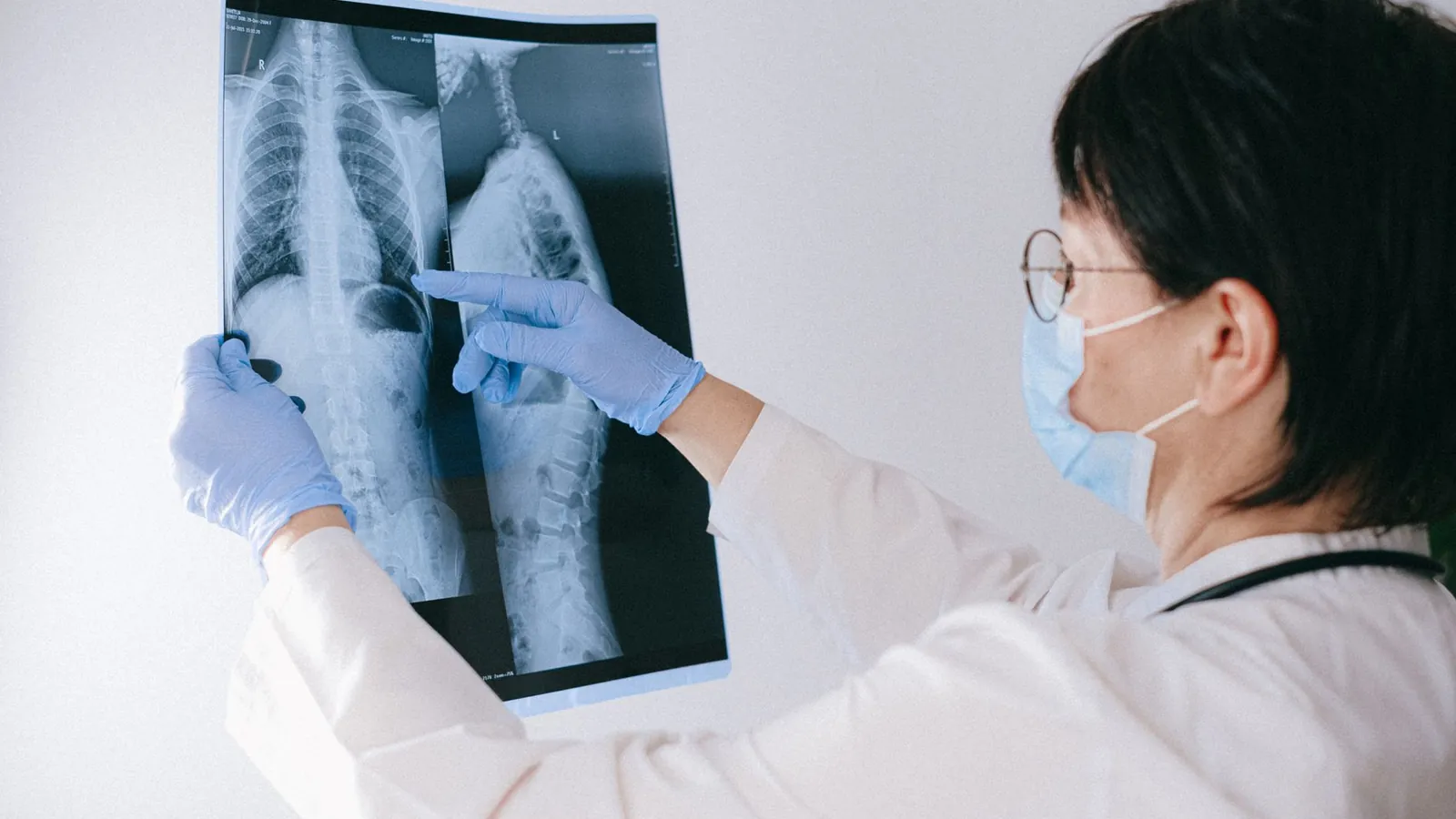
You had neck pain, someone ordered an X ray or MRI, and the report came back with the phrase cervical spondylosis. Possibly with supporting cast: degenerative changes, disc space narrowing, osteophytes.
It reads like a diagnosis of something serious and progressive. What it actually describes is the neck's equivalent of grey hair.
What the words mean
Cervical spondylosis is the umbrella term for age related change in the neck: discs losing water content and height, small bony spurs called osteophytes forming at the edges of vertebrae, and joints showing wear.
These changes accumulate in everyone. By age 60, the large majority of adults show them on imaging, and most of those people have no neck pain whatsoever. Studies scanning pain free volunteers find disc degeneration in most necks from middle age onward.
The report describes what your neck looks like, not what it feels like or what it will feel like. The correlation between the severity of changes on a scan and the amount of pain a person has is weak, which is the single most useful fact on this page.
That is the same story we tell about knees in our guide to knee osteoarthritis, and the evidence behind it is just as consistent for necks.
So why does my neck hurt?
Usually for the same reasons any neck hurts: muscles working overtime in sustained positions, joints that have stiffened through underuse, poor sleep, stress carried in the shoulders, and a workload the neck is not currently conditioned for. The spondylosis is mostly a bystander that happened to be photographed at the scene.
The practical consequence: treatment targets the same things whether or not the word appears on your report. Our guide to neck pain from desk work covers the everyday version, and headaches that start in the neck covers the upper neck variant.
The two situations that deserve more attention
Spondylosis itself rarely needs anything beyond the standard approach. Two of its possible complications do.
Cervical radiculopathy is a nerve root being irritated where it exits the spine, often by a spur or disc narrowing the exit. The signature is arm symptoms rather than neck symptoms: pain, pins and needles or numbness following a strip down the arm, sometimes weakness in a specific movement. This usually still settles without surgery, and it changes what treatment should be doing, so it is worth identifying properly.
Cervical myelopathy is rarer and more serious: the spinal cord itself being compressed. The signs are easy to dismiss because they creep: hands becoming clumsy with buttons and coins, handwriting deteriorating, walking becoming unsteady or wide based, sometimes changes in bladder urgency. This combination needs a specialist referral promptly, not a course of neck exercises.
| Ordinary spondylosis | Radiculopathy | Myelopathy | |
|---|---|---|---|
| Main complaint | Neck ache, stiffness | Arm pain, tingling, weakness | Clumsy hands, unsteady walking |
| Distribution | Local, sometimes to shoulders | A specific strip down the arm | Both hands, legs, balance |
| Urgency | Routine | Assess soon | Refer promptly |
What actually helps
Keep the neck moving. Stiffness feeds the pain cycle. Gentle rotation and side bending through comfortable range, often, beats protecting the neck into further stiffness.
Train the deep supporters. The chin tuck works the muscles that hold the head balanced over the spine, and it remains the best studied starting exercise for persistent neck pain.
Get the shoulder blades and mid back involved. The neck suffers when its neighbours stop contributing. Our desk worker's neck and shoulder set covers the whole chain in a few minutes a day.
Use movement snacks, not marathon corrections. Changing position briefly every half hour does more than any perfect posture held rigidly. The evidence on posture is more forgiving than most people believe, as our guide to posture and back pain explains.
Manual therapy has a place. Hands on treatment helps symptoms in the short term and makes the exercise work possible. It is the start of the plan rather than the whole of it.
Expect flare ups, not cures. A fifty year old neck will grumble occasionally. The goal is a neck that recovers quickly and does not frighten you, which is a realistic and achievable target.
What about the pillow, the collar and the traction?
Pillow: one that keeps the neck level with the rest of the spine, filling the gap between head and mattress. Expensive contoured designs have little evidence over an ordinary pillow of the right height.
Soft collars are out of favour except very briefly after acute injury. Worn for weeks, they de-condition exactly the muscles the neck needs.
Traction gives some people short term relief in radiculopathy. As a standalone treatment for ordinary spondylosis it has little support.
Get it assessed if
Arm pain, tingling or weakness follows a specific strip down the arm, symptoms have not begun improving after a few weeks of sensible care, or pain wakes you every night.
Seek prompt medical review for the myelopathy pattern: increasingly clumsy hands, deteriorating handwriting, unsteady walking, or new bladder changes. And urgently for neck pain with fever, unexplained weight loss, a history of cancer, or after significant trauma.
Otherwise, treat the report as a description of ordinary ageing that most of your peers share, and treat the neck itself, which responds to the same honest work at any age.