
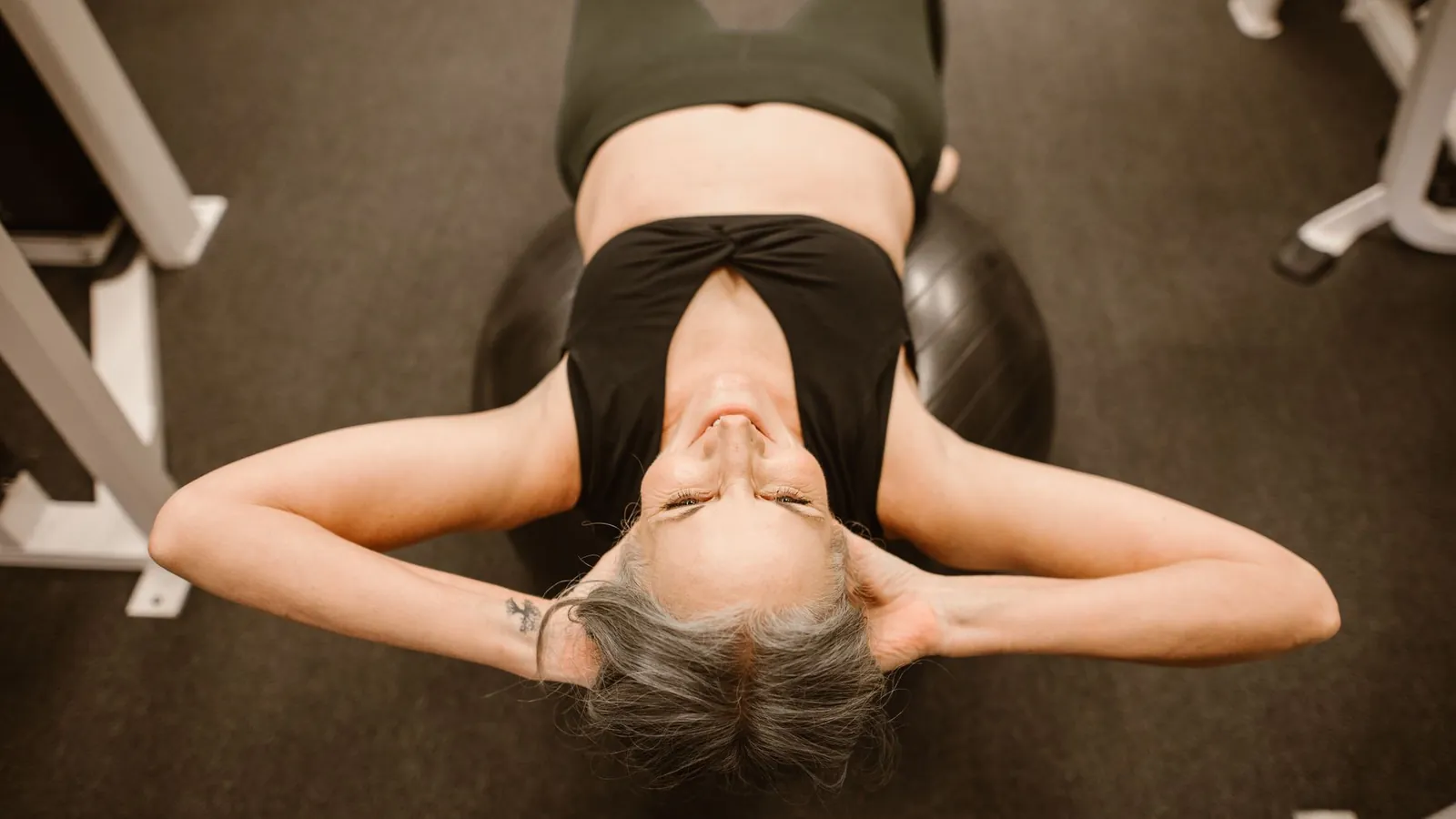
Somewhere in the weeks after giving birth, most people notice it. A softness down the middle of the abdomen, or a ridge that appears when you sit up from lying down.
That is diastasis recti, a separation of the two halves of the rectus abdominis where they meet at the midline. It is present in essentially all pregnancies by the third trimester, which makes it a normal adaptation rather than an injury.
The distress it causes is usually out of proportion to what it is.
What actually happens
The two vertical bands of the rectus abdominis are joined by a sheet of connective tissue called the linea alba. During pregnancy this tissue stretches and thins to accommodate the growing uterus. That is its job.
After birth it begins to recoil. For most people that process continues over roughly eight weeks with no intervention at all, and continues more slowly for many months after that.
Around 60 percent of people have a measurable diastasis at six weeks postpartum. By twelve months, roughly a third still do. Both of those groups include very large numbers of people with no symptoms whatsoever.
The linea alba is not torn. It is stretched. Stretched tissue regains stiffness by being loaded progressively, in the same way every other tissue in the body does.
The thing everyone measures is the wrong thing
The instinct is to measure the gap in finger widths and treat that number as the score.
Current evidence points elsewhere. What correlates with function, and with symptoms, is not how wide the gap is but how much tension you can generate across it. A narrow gap with a soft, unresponsive midline gives more trouble than a wider gap with good tension.
You can feel the difference yourself. Lie on your back with knees bent. Place your fingers just above the navel, then lift your head slightly off the floor.
- If the midline springs up to meet your fingers, that is tension. Good sign.
- If your fingers sink into a soft valley, that is what needs work, whatever the width.
A gap wider than about two finger widths that also feels soft and offers no resistance is worth having assessed. Width alone is not the story.
Symptoms worth taking seriously
Most diastasis is asymptomatic. Where it does cause problems, they show up as:
- A visible bulge or doming along the midline when you sit up, lift or strain
- A feeling that the trunk lacks support, particularly when carrying
- Low back or pelvic pain that started or worsened postnatally
- Difficulty flattening the abdomen despite general fitness returning
- Pelvic floor symptoms, which frequently accompany it, since the two systems work together
That last point matters. The abdominal wall, the diaphragm, the deep back muscles and the pelvic floor function as one pressure system. Treating the abdomen alone rarely works, which is why leaking and heaviness so often improve when the whole system is addressed.
What helps
Start with breathing. Not as a relaxation exercise, but as a mechanical one. Breathe into the lower ribs so they expand sideways, then let the exhale come naturally. Coordinating the diaphragm and the pelvic floor is the foundation everything else is built on, and it can begin within days of an uncomplicated birth.
Then connect the deep system. On the exhale, gently draw the lower abdomen inward while feeling the midline stay firm rather than doming. Low effort, roughly a three out of ten. This is not sucking in.
Then load progressively. This is the part frequently missing. Once you can maintain tension, the abdominal wall needs actual work to regain stiffness: dead bug variations, side planks from the knees, carrying loads, and eventually the movements you were told to avoid.
Watch for doming, not for the gap. Doming during an exercise means the load is currently above what your midline can control. Reduce it, do not abandon it.
Give it time. Meaningful change takes twelve weeks or more of consistent work. This is slower than most postnatal advice suggests.
The breathing, connection and gentle loading described above are sequenced in our postnatal foundations set.
What about crunches and planks
The usual advice is to avoid them permanently. That is too blunt.
Crunches and full planks are not dangerous, they are simply demanding. They ask a lot of a midline that cannot yet control that much load, which is why they cause doming early on. The goal is to return to them, progressively, rather than to spend your life avoiding them.
Anything that produces obvious doming today is too much for today. Nothing more than that.
Does surgery help
Abdominoplasty with repair of the linea alba is occasionally appropriate, usually where there is a very large separation, a hernia, or persistent symptoms after a genuine attempt at rehabilitation. It is not a first step, and outcomes are better in people who have built strength beforehand.
Most people never need it.
Get it assessed if
You can feel a distinct bulge that protrudes when you cough or strain, which may be a hernia rather than a diastasis, you have ongoing back or pelvic pain, you are leaking or feeling heaviness in the pelvis, or you want to return to running and lifting and do not know where to begin. Our guide to returning to running after birth covers that progression.
There is no deadline on any of this. People make substantial progress starting years postpartum, and the tissue responds to loading whenever you begin.