
Flat feet get treated as a problem to be fixed, often after someone glances at a footprint and recommends insoles. In reality, a low arch is a normal variation in a large share of the population, and most people who have one will never get a symptom from it.
The useful question is never "are my feet flat". It is does the foot move properly, and does it hurt.
Flexible versus rigid, the distinction that matters
This single test tells you more than any footprint.
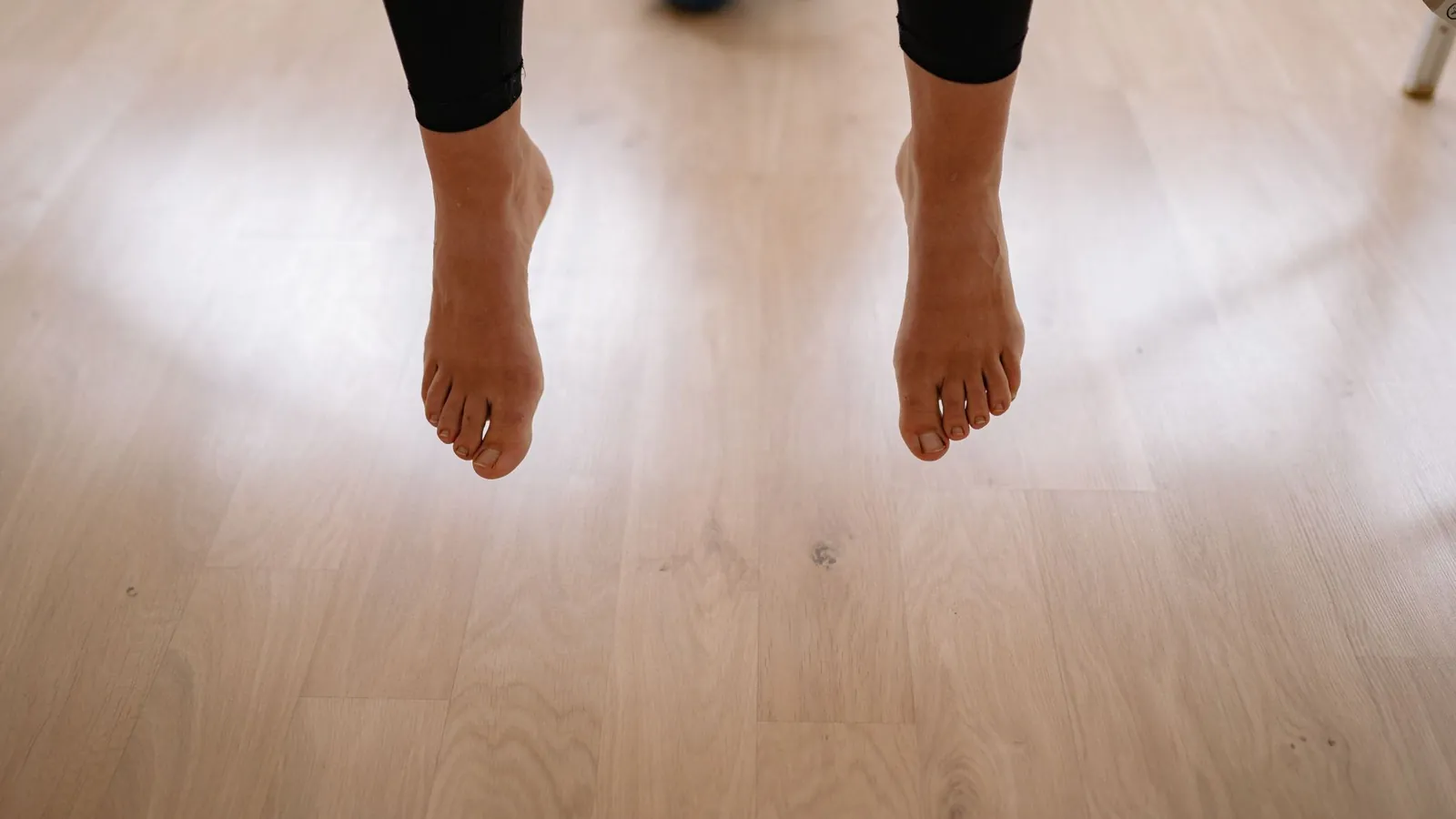
Stand up and rise onto your toes. Watch the inside of your foot.
- If an arch appears as you rise, you have a flexible flat foot. The structures work, they just sit low when you stand. This is the common type and is usually harmless.
- If the foot stays flat with no arch forming, that is a rigid flat foot. This is much less common and does warrant assessment, because it can point to a bone coalition or a problem with the posterior tibial tendon.
Children are supposed to have flat feet
Nearly all toddlers appear flat footed. The arch develops gradually through childhood and often is not established until around age seven to ten. A fat pad under the arch adds to the impression in younger children.
Treatment is rarely needed. Referral makes sense if the foot is rigid, if it is painful, if only one side is affected, or if the child is genuinely limited in what they can do.
Do flat feet cause injuries?
Less than the marketing suggests. Large studies looking at whether foot posture predicts running injuries have found the relationship to be weak. Foot shape is a poor predictor on its own.
Where a low arch is more plausibly relevant is when it combines with other things: a sudden increase in mileage, poor hip and calf strength, or a job spent standing on hard floors.
Feet are not fragile structures that need propping up. They are load bearing structures that adapt, and like any tissue they mostly get into trouble when load changes faster than they can adjust.
When arch supports actually help
Orthotics have a genuine place, but as a symptom management tool rather than a correction.
They can be worth trying if:
- You have pain that eases noticeably when the arch is supported
- You are managing an acute flare and want to reduce load while you build strength
- You have a rigid flat foot or a posterior tibial tendon problem
- You have diabetes and need pressure redistribution, which is a different and important use
They are not worth buying because a scan of your foot said your arch is low and you have no symptoms at all. Correcting a shape that is not causing trouble is treating a picture.
What helps more than insoles
Strength through the foot, calf and hip is the part that changes tolerance.
Calf raises are the highest value exercise here. Progress from double leg to single leg, slowly, three sets every other day.
Foot intrinsic work such as short foot exercises and toe spreading builds the small muscles that support the arch actively.
Hip strength matters because the thigh collapsing inward increases pronation at the foot. Side lying abduction and single leg control work address it.
Progress load gradually. If standing all day is the problem, cushioned footwear and breaking up standing time help while strength builds.
Get it assessed if
- The foot is rigid and no arch appears on tiptoe
- Only one foot is flat, especially if that is a recent change in an adult
- There is pain along the inside of the ankle below the bony bump, which can indicate posterior tibial tendon dysfunction
- The arch has collapsed progressively over months or years
- There is numbness, or pain that wakes you at night
A recently collapsed arch in an adult is the one presentation worth acting on promptly, because posterior tibial tendon problems respond much better when caught early. If your pain is under the heel rather than the arch, read our guide to plantar fasciitis instead.