
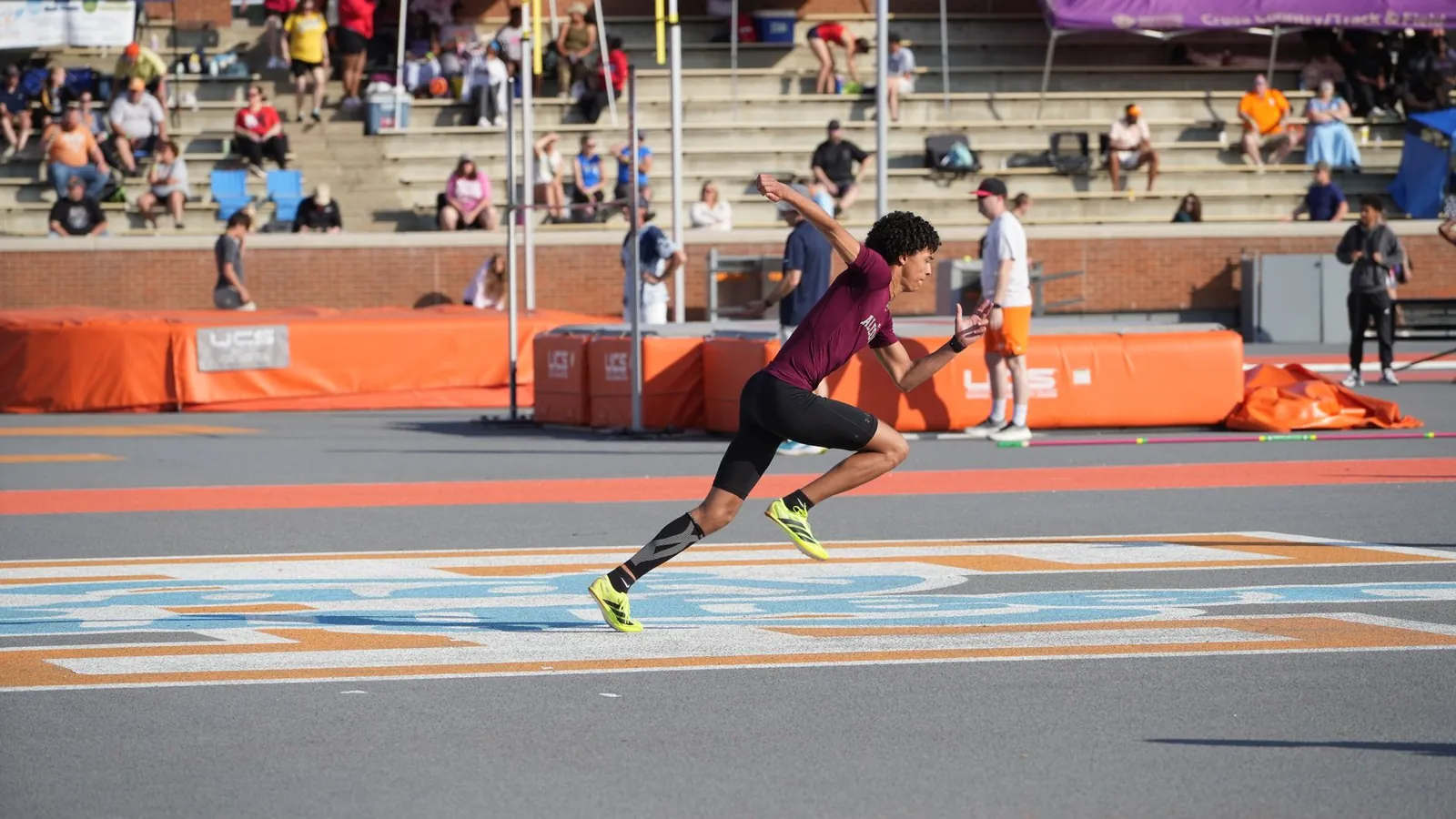
You felt it go while sprinting, or reaching for a ball, or right at the end of a match when you were tired. It settles over a fortnight, you go back, and six weeks later it goes again in almost the same place.
Hamstring strains have one of the highest recurrence rates of any injury in sport, somewhere around a third. The reason is rarely bad luck. It is that the tissue healed while the capacity never came back, and the decision to return was made on feel.
Two different injuries with the same name
Where and how it happened tells you a lot about the timeline.
| Sprint type | Stretch type | |
|---|---|---|
| How | Top speed running, sudden acceleration | High kick, sliding tackle, splits-like reach |
| Where | Upper outer thigh, biceps femoris | Deep and high, near the sitting bone |
| Muscle | Usually biceps femoris long head | Often semimembranosus |
| Typical recovery | Weeks | Frequently months |
The stretch type is the one people underestimate. It hurts less at the moment of injury and takes considerably longer to resolve, particularly when it is close to the tendon at the top.
What the hamstrings are actually doing
They are not primarily bending your knee. During sprinting, their hardest job is in the late swing phase: the leg is travelling forwards and the hamstrings contract while being lengthened, decelerating the shin before the foot lands.
That is an eccentric contraction under high speed and high load, and it is where the tissue fails. It also explains why rehabilitation that only involves curling a weight with the knee does not prepare you to sprint.
A hamstring that is strong in a machine and untrained at length, at speed, is a hamstring that will fail at the exact moment it is needed. Training the position of injury is the point.
Does this sound like yours?
- A sudden grab, pull or pop at the back of the thigh during effort
- Sometimes an audible or felt snap
- Bruising appearing over the following two or three days, often tracking down the leg
- Sore to press over a specific spot
- Painful to stretch the leg out straight
- Weak and hesitant when you try to accelerate
Bruising is a useful sign. It suggests genuine muscle fibre damage rather than a cramp or a referred pain.
The first week
Protect briefly, then move. Two or three days of avoiding aggravation, not two weeks of rest. Prolonged immobilisation produces a larger, less organised scar and a stiffer, weaker muscle.
Start gentle loading early. Isometric holds within a comfortable range can usually begin within a few days, and starting early is associated with returning sooner without raising the recurrence rate.
Do not stretch aggressively into pain. Pulling on healing tissue in the first fortnight is counterproductive. Gentle movement, yes. Forcing range, no.
Keep the rest of you training. Upper body, the other leg, and cardiovascular work that does not provoke it.
What actually rebuilds it
Eccentric strength at length. This is the part with the strongest evidence for preventing recurrence. Nordic curls are the best studied exercise in this whole area, and programmes including them substantially reduce hamstring injury rates across teams.
Load in the lengthened position. Romanian deadlifts, single leg deadlifts and glider or slider exercises train the muscle where it is long, which is where it tore.
Hip extension strength. Glute bridges and progressions to the single leg version. Weak glutes make the hamstrings work harder for longer.
Trunk and pelvic control. A pelvis that tips forward puts the hamstrings on stretch before they even start. Our core foundations set covers this layer.
Then running, progressively. Straight line jogging, then strides, then accelerations, then maximum speed. The high speed exposure is not optional. If you have not sprinted in rehabilitation, you have not tested the thing that broke.
Before you go back
Returning on feel is what drives the recurrence statistic. Reasonable criteria:
- Full pain free range of motion compared with the other leg
- Strength within about ten percent of the uninjured side, tested at length
- No tenderness on pressing the injured area
- Completed maximum speed running without apprehension
- Managed a full training session at intensity without symptoms next day
Meeting these takes longer than feeling fine, which is exactly the point.
Why it happens in the first place
- Previous hamstring injury, by far the strongest predictor
- Weakness in eccentric strength, measurable and trainable
- Fatigue, which is why so many go in the last fifteen minutes of a match
- A sudden increase in high speed running, often after a break
- Age, with risk rising steadily after the mid twenties
- Reduced hamstring length, though this matters less than strength
What else it might be
Pain at the back of the thigh is not always muscular:
- Referred pain from the lumbar spine or the sciatic nerve, which usually lacks a clear moment of injury and no bruising. Our sciatica guide covers this
- Proximal hamstring tendinopathy, a deep ache right at the sitting bone, worse with sitting and with uphill running, which builds gradually rather than tearing
- Referred pain from the hip
Get it assessed if
You heard a pop with immediate severe pain and cannot walk, there is a visible gap or significant deformity in the muscle, bruising is extensive, you have numbness or tingling down the leg, pain is right at the sitting bone and has been building for months, or this is the second or third time on the same leg.
That last one deserves proper attention rather than another round of the same rehabilitation. Recurring hamstring injuries almost always mean a capacity gap that was never measured, and measuring it is straightforward.