
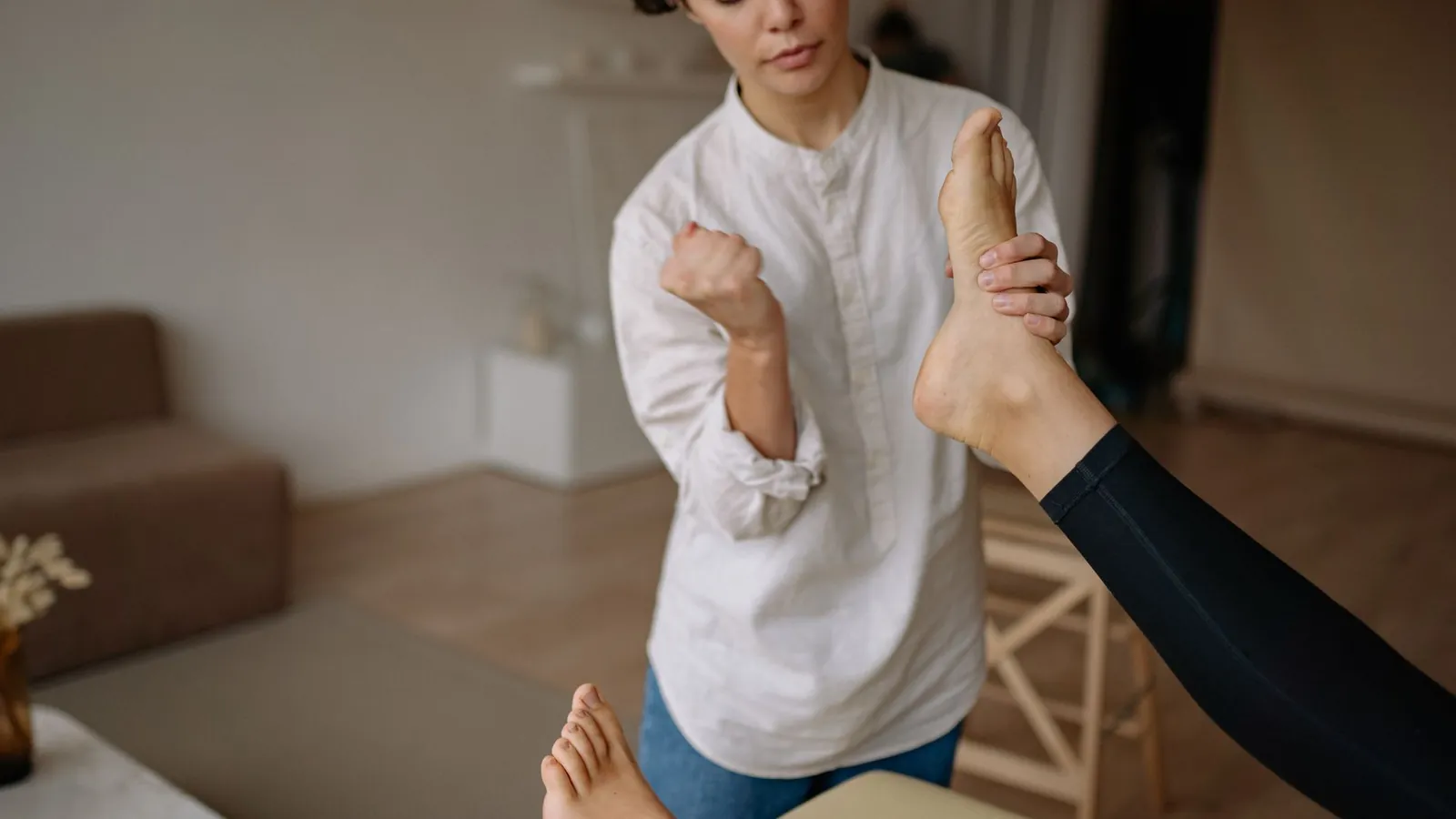
The pattern is unmistakable. The first few steps in the morning produce a sharp, stabbing pain under the heel. It eases within ten minutes of walking, feels almost normal by mid-morning, then returns after you sit for a while or at the end of a long day.
That specific "first steps" signature is the classic presentation of plantar fasciitis, irritation of the thick band of tissue running along the sole from heel to toes.
Why the mornings are worst
Overnight, the foot rests in a pointed-down position and the plantar fascia shortens slightly. Tissue repair that happens during sleep does so at that shortened length. Your first steps then load it suddenly and stretch it out, hence the stab, and hence why it improves as the tissue warms and lengthens.
The same mechanism explains the flare after sitting at a desk for an hour.
What actually causes it
It is a loading problem far more often than a structural one. The usual contributors:
- A recent increase in walking or running volume
- A change of footwear, especially into flat, unsupportive shoes
- Long hours standing on hard floors, often after a job change
- Reduced calf flexibility, which increases load through the fascia
- Weight gain over a relatively short period
Notice the theme: something changed. Tissue that has adapted to a certain load usually copes fine, it is the rate of change that causes trouble.
Heel spurs are mostly a red herring
Many people get an X-ray showing a heel spur and conclude that a bony spike is stabbing their foot. In reality, heel spurs are common in people with no pain at all, and plenty of people with severe plantar fasciitis have no spur.
The spur is generally a consequence of long-term traction on the heel bone, not the source of the pain. Removing it is rarely the answer.
The treatment that works
Here is where most people go wrong: they stretch, get partial relief, and never progress beyond it. Stretching helps symptoms in the short term, but loading is what changes the tissue.
1. Calf and fascia stretching: a straight-knee and a bent-knee calf stretch, 30 seconds each, plus a gentle fascia stretch by pulling the toes back. Do these before your first steps in the morning, while still sitting on the edge of the bed. That one change alone often takes the edge off within days.
2. Progressive heel raises. This is the part that actually resolves it. Slow, heavy calf raises, performed with the toes propped up on a rolled towel so the fascia is lengthened, build tolerance in the tissue. Three sets, slow tempo, every other day, progressing the load over weeks.
3. Manage the load meanwhile. Supportive shoes indoors, a temporary reduction in standing time, and cushioning at work. Not rest, just less.
4. Give it time. Realistic timeline is three to six months for full resolution. Most people feel meaningfully better well before that.
| Do | Skip |
|---|---|
| Morning stretch before first steps | Walking barefoot on hard floors |
| Slow, loaded calf raises | Aggressive rolling on a spiky ball for pain relief only |
| Supportive footwear indoors | Complete rest for weeks |
| Gradual return to walking volume | Chasing a heel spur diagnosis |
When it is not plantar fasciitis
Get it assessed rather than self-treating if:
- The pain is at the back of the heel rather than underneath, that suggests the Achilles insertion
- There is numbness, tingling or burning spreading into the sole, possible nerve entrapment
- The heel is painful to squeeze from the sides, particularly after a sharp increase in running, a stress fracture needs ruling out
- Both heels became painful suddenly without a clear change in activity
A proper assessment separates these quickly, and they are managed very differently.