
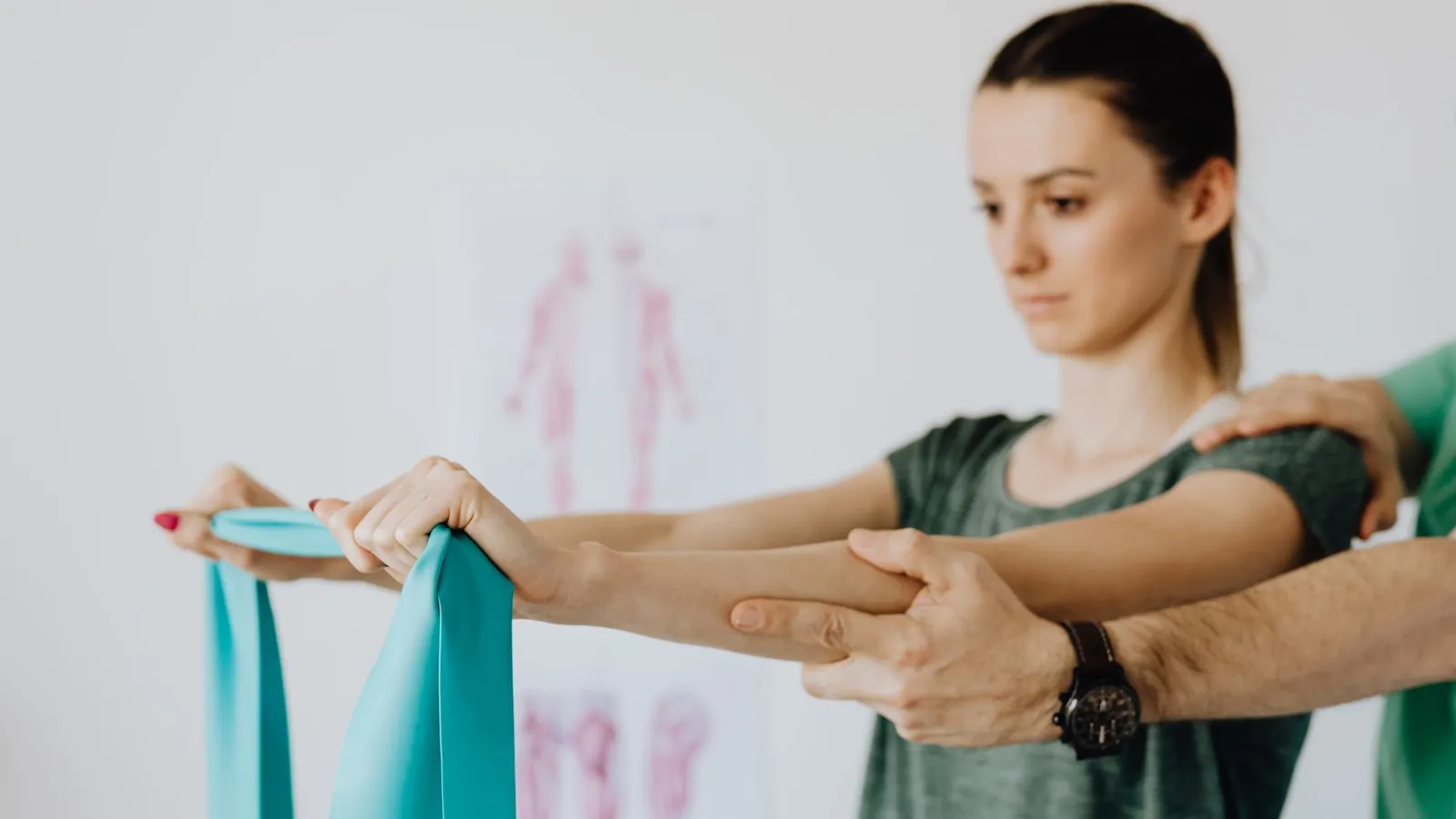
Surgery fixes a structure. It does not restore strength, range or confidence, and those three are what determine whether you get back to normal life. That work is rehabilitation, and it usually takes considerably longer than people are told.
Every surgeon has their own protocol and it always takes precedence over general advice. What follows is the shape of recovery, so you know what you are signing up for.
Four principles that apply to every joint
1. Protect, then load. Early on the priority is safeguarding the repair. After that the priority reverses, and the tissue needs progressive loading to remodel. The transition point is set by your surgeon, not by how you feel.
2. Range before strength. A stiff joint that is strong is far harder to fix than a mobile joint that is weak. Early motion work matters more than it feels like it does.
3. Swelling limits everything. A swollen joint physically inhibits the muscles around it. The quadriceps in particular shuts down in response to knee swelling, which is why elevation and gentle movement are not optional extras.
4. Do not skip the last third. This is where most people go wrong. Once the joint feels normal in daily life, the temptation is to stop. But daily life is a low bar. Returning to sport, lifting or physical work needs capacity well beyond that, and this is where re-injury happens.
Shoulder
The most protocol driven joint, because a repaired tendon or labrum can be pulled apart by active movement before it has healed.
| Phase | Roughly | Focus |
|---|---|---|
| Protection | 0 to 6 weeks | Sling, passive movement only, elbow and hand kept moving |
| Range | 6 to 12 weeks | Active assisted then active movement, scapular control |
| Strength | 3 to 6 months | Progressive rotator cuff and scapular loading |
| Return | 6 to 12 months | Overhead work, sport, heavy lifting |
Rotator cuff repair is the slowest of the common shoulder operations. Full recovery commonly runs six to twelve months, and pushing active movement early genuinely risks the repair. Stabilisation after dislocation is usually quicker, with return to contact sport around six to nine months.
Knee
ACL reconstruction is the one most people underestimate. The graft is at its weakest several months in, not at the start, which is precisely when people feel good and want to return.
- Full range and no swelling: first 6 to 12 weeks
- Strength and control: 3 to 6 months
- Return to pivoting sport: 9 to 12 months minimum, based on strength testing rather than the calendar
Returning before nine months carries a markedly higher re-rupture rate. This is one of the better evidenced numbers in sports rehabilitation.
Knee replacement is different in character. Range of motion in the first six weeks is the priority, because stiffness that sets in early is difficult to recover later. Most people are walking comfortably by three months and still improving at a year.
Meniscal repair requires more protection than a meniscectomy, often restricted weight bearing and limited bending for six weeks.
Ankle
After fracture fixation, the joint stiffens quickly and the calf wastes fast.
- Immobilisation and protected weight bearing for around six weeks
- Then range of motion, particularly bringing the toes up towards the shin
- Calf strength, which is almost always the limiting factor at three months
- Balance retraining, the step that prevents the ankle feeling unreliable long term
Expect swelling that fluctuates for six to twelve months. That is normal and not a sign something is wrong.
Elbow
The elbow is the joint most prone to permanent stiffness, so early controlled motion is the theme throughout.
Full passive stretching is usually avoided because aggressive stretching of an irritated elbow can trigger extra bone formation. Gentle active movement, little and often, is the approach. Most stiffness that remains at six months is difficult to change afterwards.
Wrist and hand
After a distal radius fracture or carpal tunnel release, the priorities are swelling control and getting the fingers moving immediately, even while the wrist itself is protected.
Stiff fingers are a bigger long term problem than a stiff wrist, and they set in within days. Grip strength typically lags well behind range and often takes six months to normalise.
What slows recovery down
- Stopping when it feels normal. The commonest cause of a poor final outcome
- Skipping the boring early work. Range and swelling control are unglamorous and decisive
- Comparing yourself to someone else's timeline. Age, the exact procedure and pre surgery condition all shift it
- Pushing through sharp pain. Discomfort during rehab is expected; sharp pain is a signal
- Doing nothing between appointments. The home programme is the treatment
Contact your surgical team if
Get in touch promptly with increasing redness, heat or discharge from the wound, fever, calf pain or swelling, sudden loss of movement you previously had, or pain that is escalating rather than settling. Those need medical review rather than more rehabilitation.