
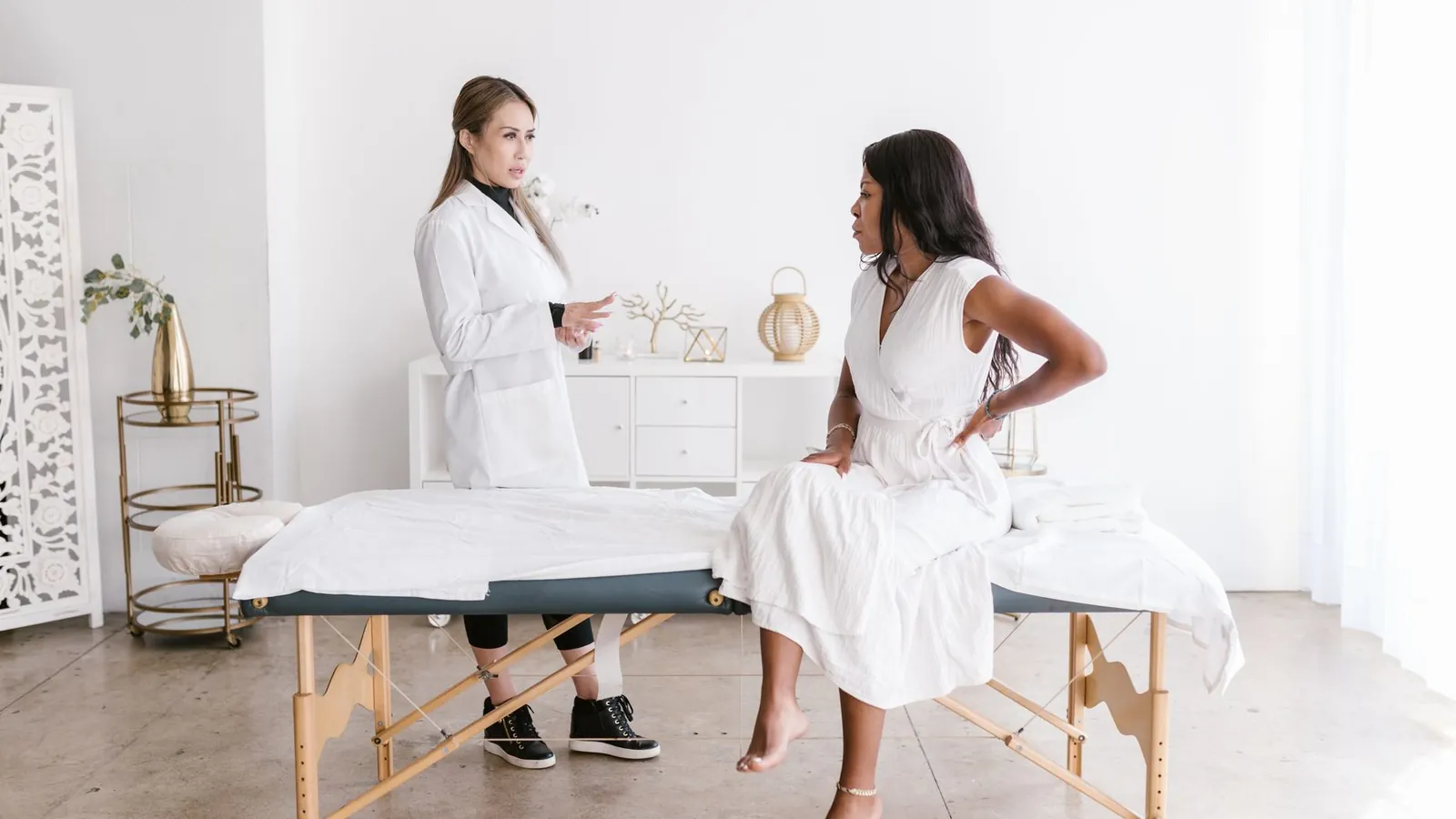
If your low back pain sits deep, on one side, in the gap between your bottom rib and the top of your pelvis, and it bites when you stand up or cough, the quadratus lumborum is a likely contributor.
It is one of the most commonly blamed muscles in the lower back, and worth understanding because the way it gets treated is often the opposite of what helps.
What it does
The quadratus lumborum, usually shortened to QL, runs from the top of the pelvis up to the lowest rib and across to the lumbar vertebrae. It sits deep, underneath the large back muscles you can feel.
Its jobs are less obvious than most muscles:
- Side bending the trunk
- Hiking the hip upward, which is how your leg clears the ground when you walk
- Stabilising the twelfth rib during breathing, which is why forceful coughing hurts
- Controlling side to side sway when you stand on one leg
That last two explain the classic symptoms. Coughing hurts because the QL anchors the rib that the diaphragm pulls on. Standing hurts because it is working constantly to control sway.
Does this sound like your pain?
- Deep ache on one side, roughly at belt level or just above
- Worse standing still, better walking or lying down
- Sharp catch on coughing, sneezing or laughing
- Painful rolling over in bed
- Sore to press deep into the gap between rib and pelvis
- Often follows carrying something heavy on one side, or a long drive
Why it tightens in the first place
This is the part usually skipped, and it is why the tightness keeps coming back.
The QL rarely becomes a problem on its own. It works harder when something else is not doing its share:
| Underlying issue | What the QL ends up doing |
|---|---|
| Weak gluteus medius | Hiking the hip to keep the pelvis level when walking |
| Stiff mid back | Providing side bend the thoracic spine is not giving |
| Leg length difference | Constantly compensating for an uneven pelvis |
| Carrying a bag on one side | Sustained one sided load |
| Guarding after a back episode | Bracing that never switched off |
Treating the QL alone is why so many people get a few hours of relief from massage and are sore again the next day. It is doing extra work for a reason.
What actually helps
Settle it first. Heat over the area for ten to fifteen minutes helps muscular guarding. Avoid standing still for long periods for a few days. Walking is usually more comfortable than standing, so keep moving rather than resting completely.
Release, gently. A tennis ball against a wall, positioned in the gap between rib and pelvis, held rather than rolled aggressively. Thirty to sixty seconds. This is symptom relief rather than treatment, and it should never be sharp.
Stretch through side bending. A standing side bend or a side lying stretch over a rolled towel, held 30 seconds, a few times a day.
Then fix the reason. This is the part that lasts:
- Gluteus medius strength. Side lying abduction and single leg control work, so the hip stops needing to be hiked. See our guide to outer hip pain for the loading progression
- Thoracic mobility. Seated rotations and side bends, so the mid back contributes
- Carry evenly. Backpack rather than shoulder bag, or swap sides deliberately
- Trunk endurance. Side planks, progressed gradually, build tolerance for the exact demand the QL keeps failing
What else produces pain in the same spot
The area is crowded, and several things refer here. Worth distinguishing:
- Facet joint irritation, usually worse leaning backwards
- Sacroiliac joint, typically lower, around the dimple of the back
- Kidney pain, higher and further out, often with fever or urinary symptoms
- Nerve root irritation, which travels down the leg rather than staying local, covered in our sciatica guide
A muscular QL problem stays local, hurts to press, and changes with position. Pain that travels, or that is unaffected by how you move, deserves a closer look.
Get it assessed if
Pain travels below the knee, there is numbness or weakness, symptoms come with fever or urinary changes, pain is constant and unrelieved by any position, or it followed a significant fall.
Otherwise, most QL related pain settles within two to three weeks with movement and the strength work above. If it keeps returning every few months, that is the signal to find what it is compensating for rather than to keep stretching it.