
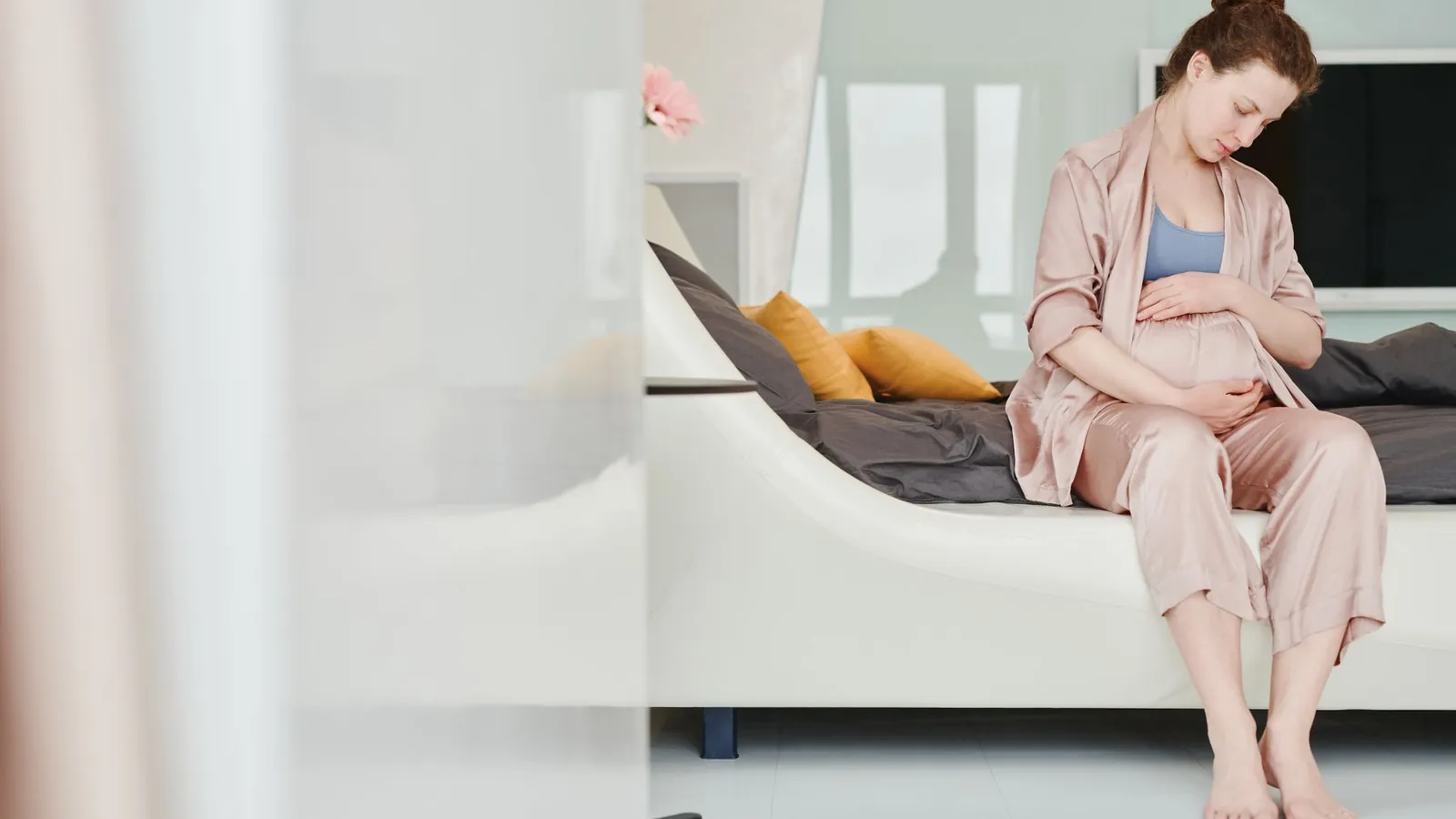
It usually starts somewhere in the second trimester. A grinding ache at the front of the pubic bone, or a deep pain on one side at the back of the pelvis. Turning over in bed becomes a production. Stairs are taken one at a time. Getting out of a car requires planning.
Around one in five pregnancies involves pelvic girdle pain, and a great many of those people are told it is simply part of being pregnant and it will go when the baby arrives.
That advice is wrong in two ways. It usually improves after birth but not always, and more importantly, it responds well to treatment during pregnancy. There is no reason to spend four months in avoidable pain.
What is actually happening
Your pelvis is three bones meeting at three joints: two sacroiliac joints at the back and the pubic symphysis at the front. Normally they move very little.
In pregnancy two things change. Hormones increase the laxity of the ligaments that hold those joints together, and the growing baby shifts your centre of mass forwards, changing how load travels through the pelvis with every step.
The popular explanation stops at "relaxin makes your joints loose", which is incomplete and unhelpful, because it implies nothing can be done. Hormone levels do not correlate well with who gets pain. What matters more is how well the muscles around the pelvis control the load passing through it, and muscle control is trainable.
That distinction is the difference between being told to rest and being given something to do.
Does this sound like yours?
- Pain over the pubic bone at the front, sometimes described as grinding or clicking
- Deep pain on one or both sides at the back, around the dimples
- Sometimes spreading into the buttock, groin or inner thigh
- Worst with: rolling over in bed, standing on one leg, stairs, getting out of a car, walking more than a certain distance
- A waddling gait, or a feeling that the pelvis will give way
- Worse at the end of the day, and worse after a busier day
The single leg test is telling. If putting your trousers on standing up, or stepping onto a stair, is markedly worse than symmetrical activities, the pelvis is struggling with asymmetric load.
What genuinely helps
Keep the legs together where you can. Roll over in bed with your knees squeezed together and move as one unit. Sit down to put on trousers and underwear. Get out of the car by swivelling both legs together. Take stairs one at a time if needed. These sound trivial and they are among the most effective things on this page, because they remove the exact movement that provokes it.
Sleep with a pillow between your knees. A firm one, thick enough that your top knee stays level with your hip rather than dropping across. A second pillow supporting the bump helps.
Strengthen, do not rest. This is the part usually missing. Glute bridges, clamshells and side lying hip abduction build the muscles that control the pelvis. Work within a pain free range, and stop short of provoking symptoms rather than pushing through.
Breathe properly. Diaphragmatic breathing coordinates the diaphragm, deep abdominals and pelvic floor, which together manage the pressure your trunk generates. This is genuinely foundational rather than a relaxation exercise.
Pace the day. Symptoms are usually cumulative rather than caused by one movement. Break up long walks and standing, and sit for tasks you would normally stand for.
A support belt, correctly fitted. A pelvic support belt worn low, around the hips rather than the waist, helps a substantial minority of people. It is worth trying, and it should feel immediately better rather than merely tight. It is an aid, not a treatment.
Hands on treatment. Manual therapy to the pelvis and surrounding muscles is safe in pregnancy and helps symptoms in the short term, which makes the strength work possible.
Things worth knowing
It does not mean you cannot deliver normally. Pelvic girdle pain is not on its own a reason for a caesarean. It is worth mentioning to your midwife so positions during labour can account for how far apart your legs comfortably go.
Exercise is still good for you. Swimming (avoiding breaststroke leg kick, which is often provocative), stationary cycling and walking within comfort all remain worthwhile.
It usually improves after birth, often quickly, but not always. If it persists beyond a few months postnatally, that is not something to wait out either.
It is not caused by weight gain and is not your fault, which is worth saying because people frequently arrive believing both.
Afterwards
Once the baby has arrived, the rebuilding is the same work as any postnatal recovery: breath, deep core connection, then progressive loading. Our postnatal foundations set covers that stage, and our guides to diastasis recti and returning to running cover what follows.
Get it assessed if
Pain is limiting your daily activity, you are struggling to walk or to manage stairs, it is getting worse rather than plateauing, or you are relying on painkillers to get through the day.
Seek medical advice urgently for: severe pain with fever, any bleeding, reduced fetal movements, sudden severe abdominal pain, or numbness in the saddle area or changes in bladder or bowel control.
The general point is that pelvic girdle pain is one of the most treatable problems in pregnancy, and one of the most commonly dismissed. Most people improve substantially within four to six sessions alongside the right home programme, and there is nothing to be gained by waiting it out.